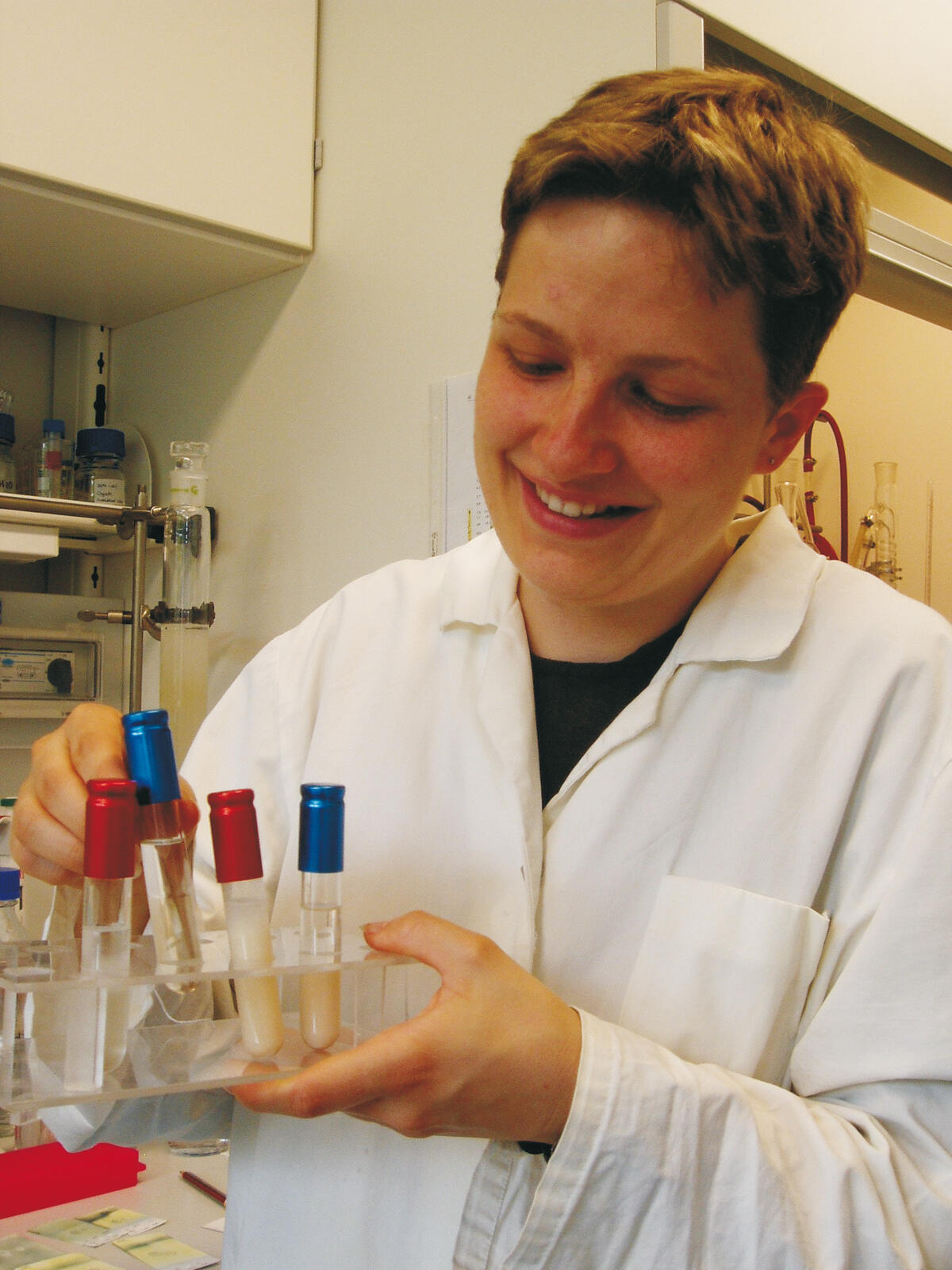
Jointly with some project partners, the TU Dresden developed an ecologically and economically advanatageous process to yield these substances. Goal of this project was a further optimisation of the whole biocatalytic procedure. The optimised oxazolidinone-synthesis is a textbook example of sustainable biocatalysis: It works at low temperatures with high yields, with an extremely high purity and neglectible waste quantities. Thus it is able to replace several chemical rearrangements in one single biocatalytic process, through which extremely aggressive and environment-endangering reagents are avoided. Against this background, it can not be thought highly enough of the procedures potential regarding environmental relief and resource protection. Simultaneously the reduced costs raise the hopes for a widespread application of these promising components in the active substance synthesis.
Projektziel:
Umweltverträgliche Synthese chiraler 2-Oxazolidinone.
Projektträger:
Technische Universität Dresden Institut für Biochemie Dr. Martin Bertau 01062 Dresden
Telefon:
+49-351-463-38355
Fax:
+49-351-463-35506
URL:
www.chm.tu-dresden.de
E-Mail:
martin.bertau@chemie.tu-dresden.de