In the agriculturally characterised Münsterland in Germany's northwest, elevated boric and fluoride pollutions are found in the well water, which before all can endanger babies and children in their development and health. Therefore, the pollution of the wells necessitates a safe, ecological and advantageous treatment system for the daily drinking water demand.
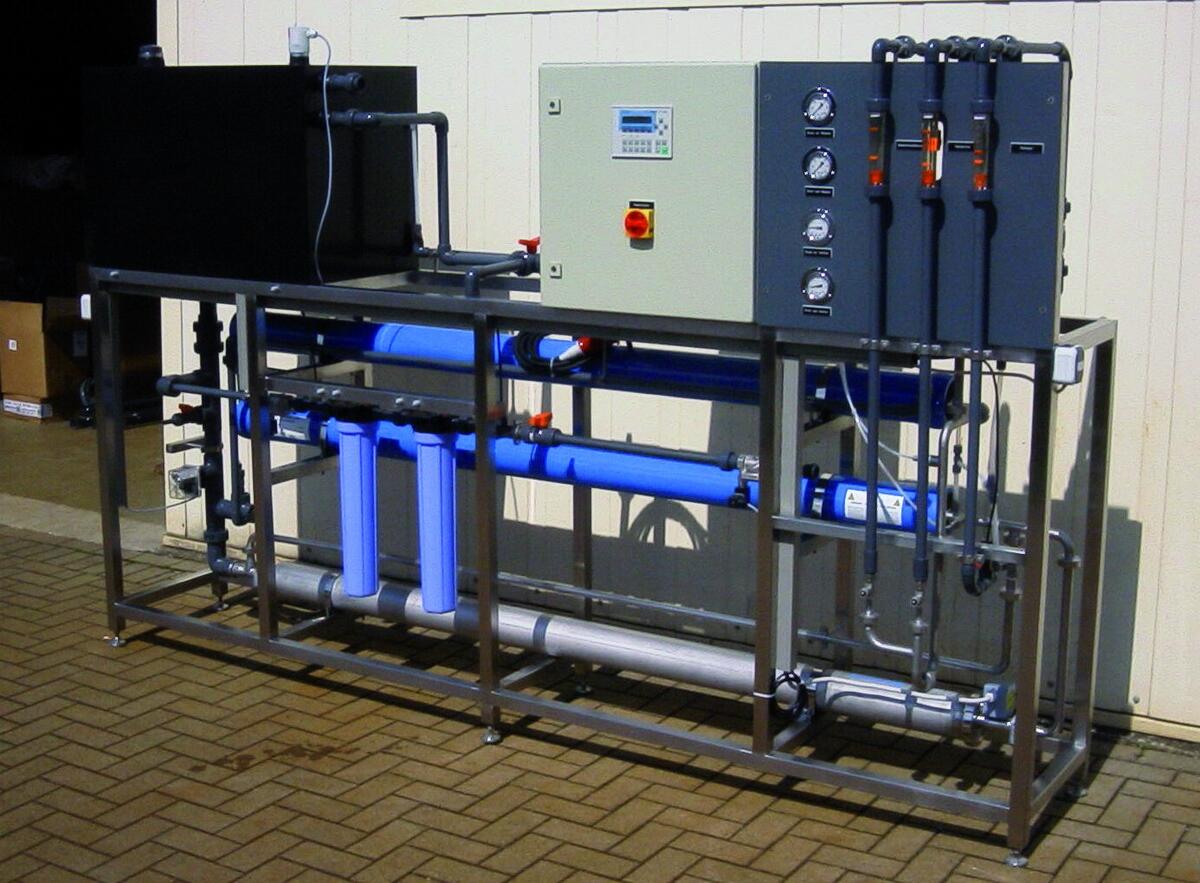
The company Weil Industrieanlagen GmbH from Osnabruck developed a self-sufficient small plant based on the reversion osmosis principle. Well water can be generally treated that its fluoride level meets the requests of the German drinking water ordinance (TrinkwV) optimally. Regarding the boric, the membrane's retention performance is so low, that it can be necessary to install an additional selective ionic exchanger. The additional installation of a sterile filter prevents the fast germ growth on the installation parts. Besides that the installation is largely maintenance-free from changing the regular filter. The processing-plant can purify polluted surface water also from nitrate, heavy metals or pesticides.
The new treatment system is already marketable as practical sub-table appliance. A comfortable on-table version for the household is planned. Here, details of the appliance layout have to be improved before a market maturity can be achieved.