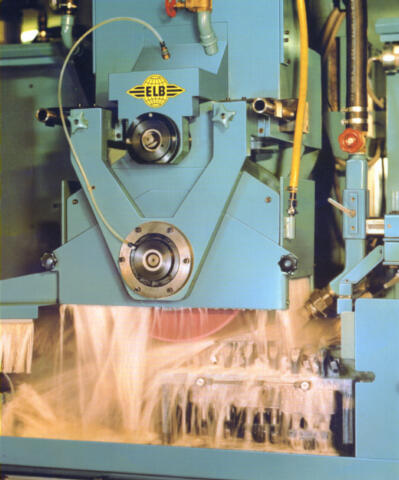
Using cooling lubricants in the industrial practice
Download
However, they can lead to occupational-physiological strain for the staff and are problematic also regarding their environmental effects. Target for innovative lubricants therefore is to replace petroleum by materials completely benign for health and environment alike.
Ecological alternatives to the substitution of petroleum-containing lubricants which are won from used edible fat and technical animal fat as well as plant oils are based on fatty acid esters and glycerol. The Bundesanstalt für Materialforschung und -prüfung BAM, Berlin, and the TU Braunschweig (Institut für Ökologische Chemie und Abfallanalytik and Institut für Werkzeugmaschinen und Fertigungstechnik) developed innovative cooling lubricants out of these materials for cooling and lubrication in technical processes.
Oilfree lubricating with glycerol and fatty acid ester
The two institutes of the TU Braunschweig explored the technological, ecological and economic potential of glycerol as innovative and environmentally-compliant component for motor oil, coolants and cooling lubricants. In first feasibility studies, the technological suitability of the glycerols was proved successfully as a main component in motor fluids and cooling lubricants. Glycerol and fatty acid ester proved to be promising candidates to replace petroleum in industrial applications and to contribute to a decisive environment and health relief.