Reducing Verticillium Wilt on strawberries

Strawberry lovers pick the fruits most dearly directly in the field. They might discover plants that look as they have dried up: these strawberries suffer from a wilt disease.

Verticillium-Welke bei Erdbeeren regulieren
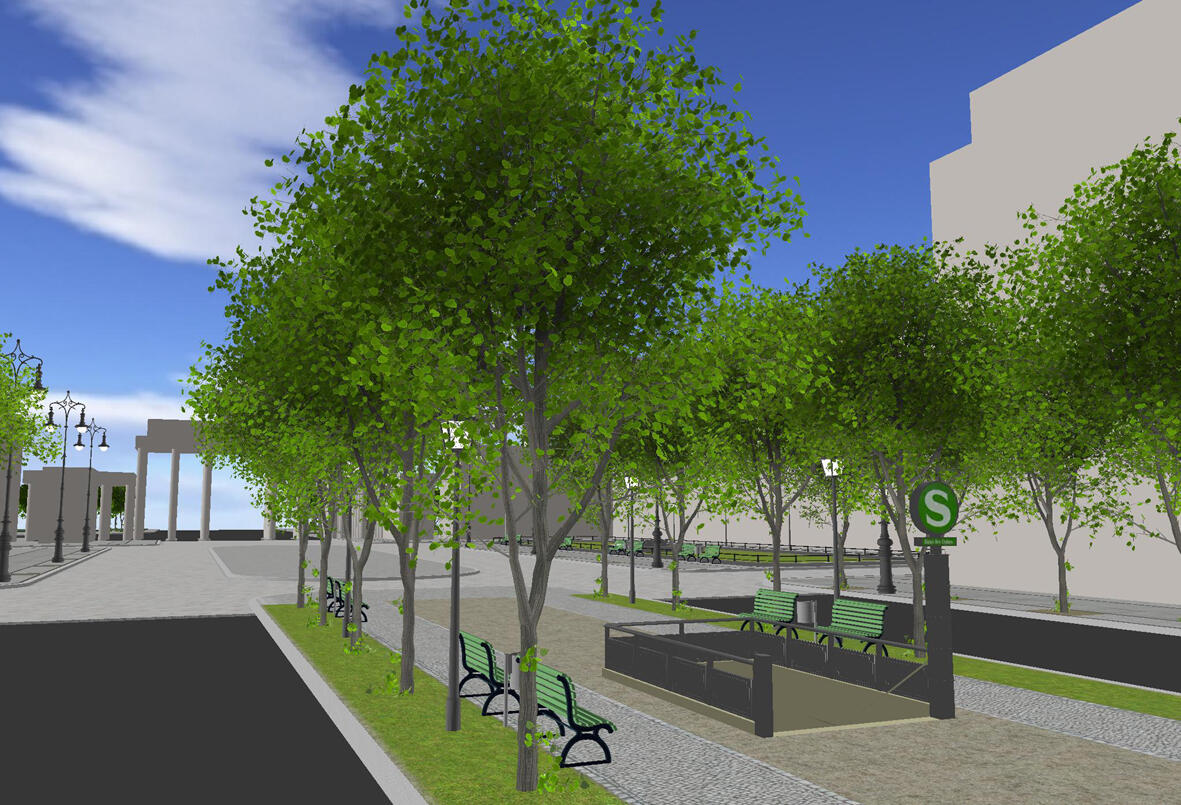
The system is used also for town planning: 3D-linden trees in a Berlin city model.
Download
The Leibnitz-Zentrum for Agrarian Landscape Research (German abbreviation ZALF) uses the ecology to reduce the Verticillium Wilt on strawberries: Climate-conformist non-pathogeneous Verticillium fungi oust the pathogenic ones whereby the vitality of the strawberry plant is completely preserved. This ecological mechanism makes fungicides redundant and secures a high vitality of the strawberry plants also at rising temperatures.

3D-landscapes in real time
Another project of the ZALF is the system Lenné3D, a visualisation tool for three-dimensional and interactive landscapes. Landscape-relevant planning processes in which future scenarios should be made visible and observable, are the heart of Lenné3D. The system illustrates plannings and especially changes of the landscapes very flexibly. It can visualize millions of 3D-plants. The landscape models are generated on the basis of the geographical information system GIS, a big library of botanically-shaped 3D-plant models, further 3D-objects and particular algorithms.