CO2 reduction of cooling systems for heavy vehicles
DownloadTransport cooling system installation in freight vehicles
Download
A way out offers the natural cryogen carbon dioxide (CO2): it can be easily extracted out of the atmosphere and is released again there. Moreover, carbon dioxide is available at a low price world-wide. Simply are also maintenance and service of air-conditioning systems since CO2 does not need to be recycled. The Konvekta AG develops CO2-based transport systems for fresh or frozen goods. First prototypes proved to be fully operative on the test stand and during the three-year practice test in a delivery vehicle of a supermarket chain.
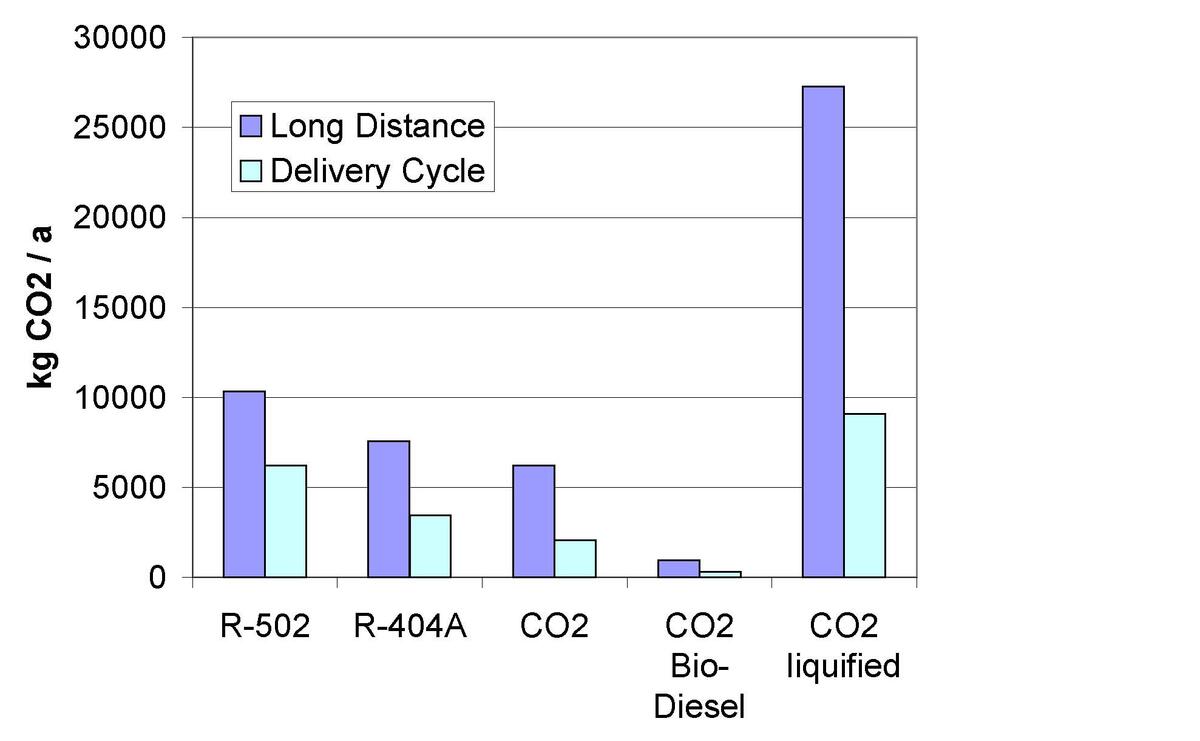
It turned out that carbon dioxide is competitive respecting cooling capacity and efficiency. The prototypes ran reliably more than 5,000 compressor operating hours and 600 hours in the delivery cycle. In comparison to conventional systems, the CO2-emissions of the new refrigeration systems were reduced by up to 50 %. The expansion to a 2-stage system promises further efficiency increases for the use in transport refrigeration.
The use of carbon dioxide in refrigeration units for fresh or frozen goods is an ecological alternative to that of conventional HFC-cryogens like »R134a«, »R 404A« and »R 410A«. Crucial advantages are the low greenhouse potential, favourable eco-balances during manufacturing and waste disposal and the world-wide availability of CO2.