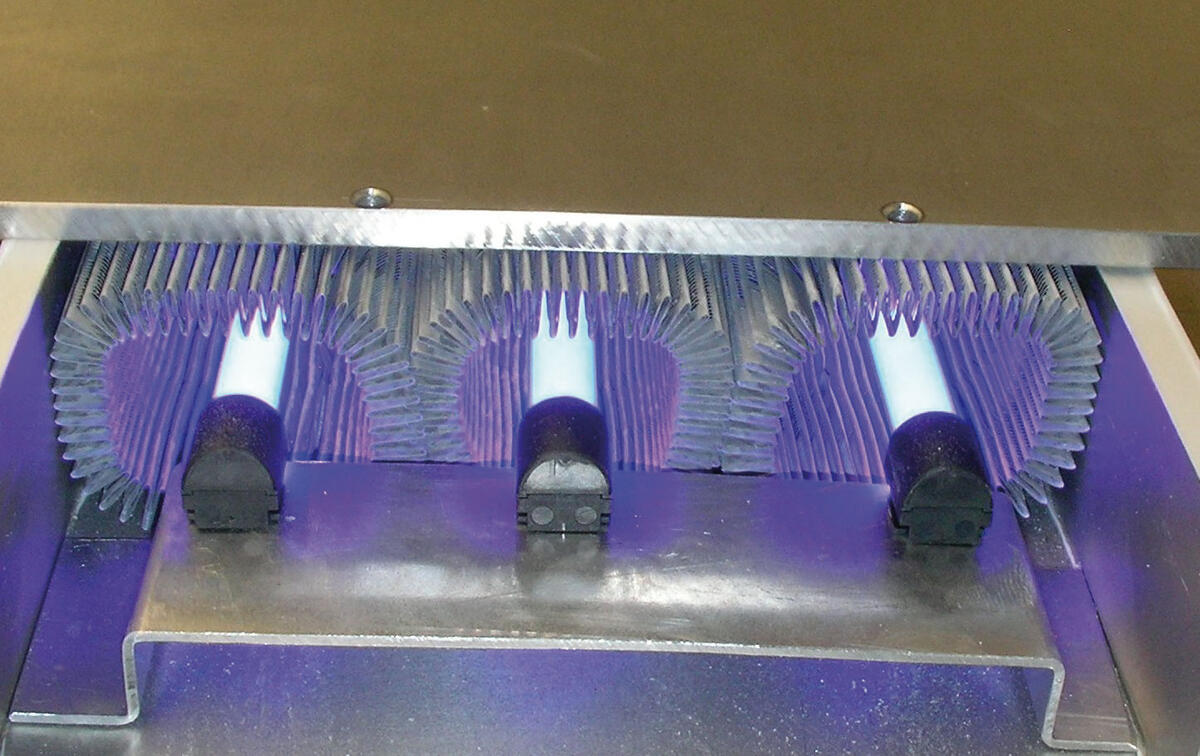
Together with the Institute for Technical and Environmental Chemistry of the Jena Friedrich Schiller University, the company helsa-automotive developed a photo-catalytic filter for the processing of the air circulation volume in cars. In its photo-catalytic property, titanium dioxide reduces the concentrations whereas energy-efficient light diodes and Linex lamps serve as light sources. The illuminants emit light in the UVA range and thus stimulate the titanium dioxide-containing photo catalyst. Adsorbed water at the catalyst surface reacts to hydroxyl radicals, that degrade the molecules of the concentrations oxidatively.
Concentrations degraded without Residues
With its prototype, the project team succeeded in degrading the test substances toluene, acetaldehyde, heptane, octane and propanol without critical residues in the gas phase. Thanks to the favourable surface-to-volume-ratio of the photo reactor that emerges through the 3D-structure of the catalyst,
the planned application of a micro reactor promises a very quick proceeding in the degradation of the concentrations.