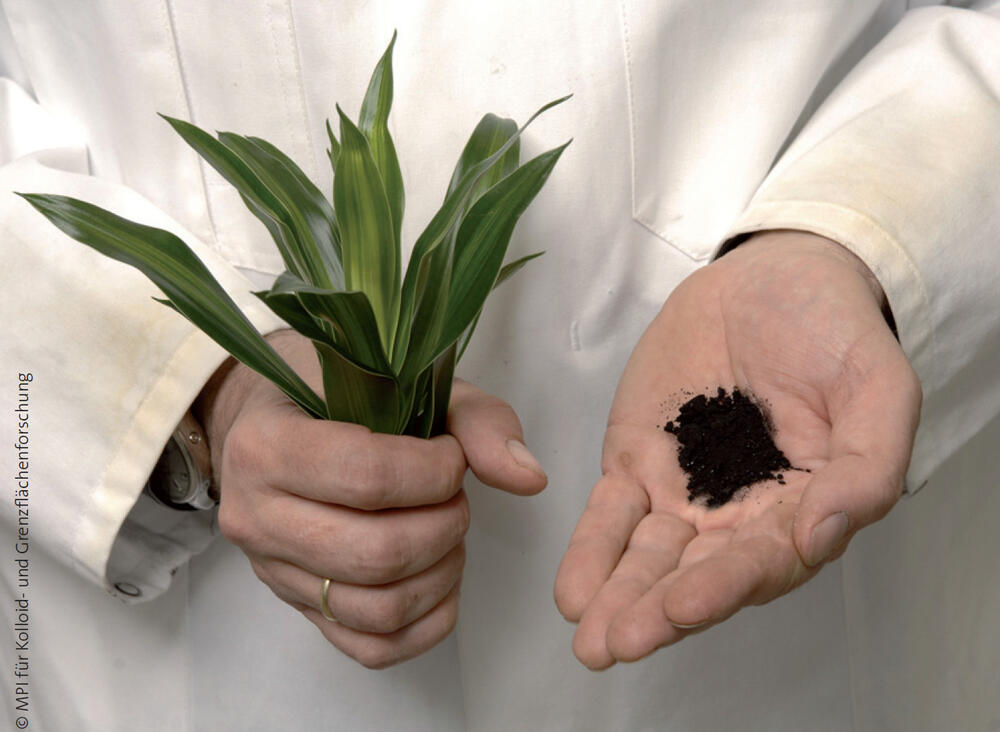
Until today, municipal solid organic waste has been either composted and recycled, or fermented. The high demand for energy and the expected shortage of energy supply have lead to a growing interest of the energy sector in organic waste. The chemical-physical process of hydrothermal carbonizing (HTC) converts organic material into a solid, coal-like product with a higher calorific value than the raw material. While adding water and a suitable catalyst, the biomass is put under pressure and heated to 180–200 °C with the exclusion of oxygen. End product of this process is a carbon in the form of small, porous lignite pearls. The conversion of organic material into an energy source of intensive calorific value facilitates the efficient use of waste even with high moisture, such as municipal organic waste.
The Ostwestfalen-Lippe University of Applied Sciences has analysed the suitability of the HTC method for conversion of municipal waste, focussing on the question whether the procedure would offer an interesting alternative in energetic and economic respect. The research team confirmed that HTC of organic waste results in an exothermic heat releasing process. Carbonizations of standard substrate and organic municipal waste showed a release of approximately five mega joule of caloric energy per kilogram of dry substance.
Another advantage of the new method: Since »Water-carbon-mixtures« show a far better drainage behaviour than each of the components alone, it can be expected that the energy balance of the entire process chain will also be more favourable than in conventional procedures.
Project Operation
Hochschule Ostwestfalen-Lippe
Fachbereich Umweltingenieurwesen und Angewandte Informatik
Fachgebiet Abfallwirtschaft und Deponietechnik
Prof. Dr.-Ing. Hans-Günter Ramke
An der Wilhelmshöhe 44
37671 Höxter
Tel. 05271/687-130
Telefax 05271/687-200
hans-guenter.ramke@hs-owl.de
http://www.hs-owl.de/fb8/fachgebiete/abfallwirtschaft/
Ref. 25604