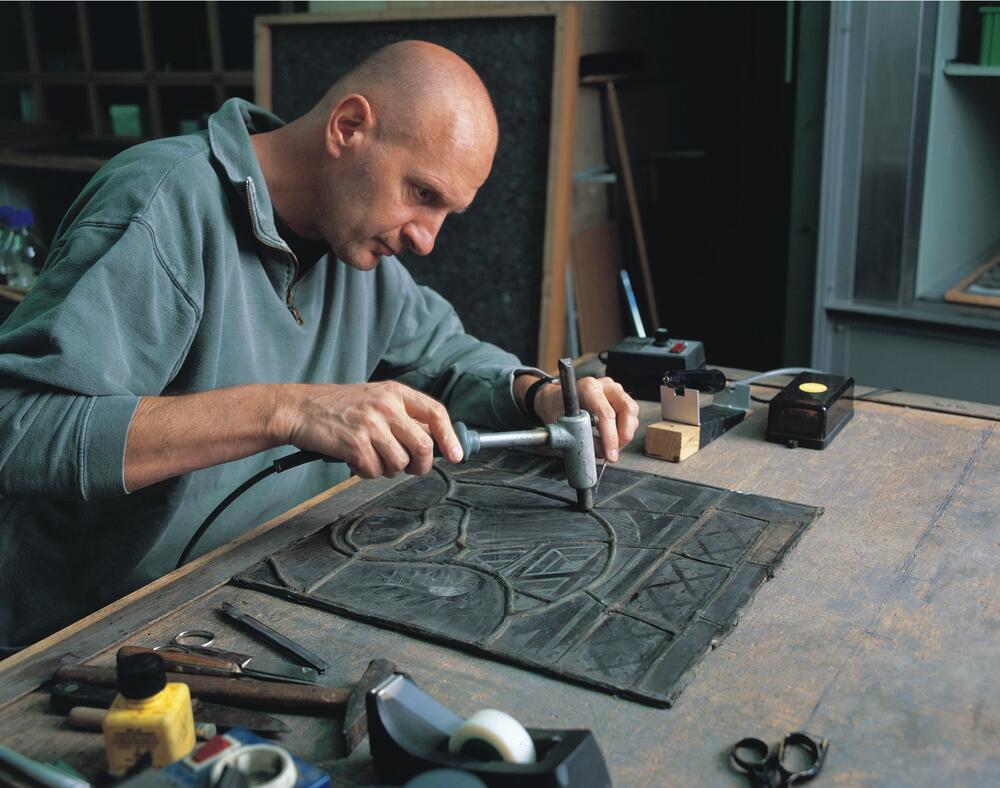
The ancient stained windows of many churches are a valuable and vulnerable cultural heritage. They are particularly susceptible to corrosion and mechanical influences, as they are caused by air pollution or other contaminations.
A typical damage is the deposition of layers of secondary corrosion salts on the outside of the windows which effects transparency, brightness and readability. Also, the glass material can be damaged which causes a loss of grisaille with which facial features or folds of garments are painted.
Particulary in East Germany, windows of many major cathedrals and churches have been heavily effected by corrosion, surface encrustation, fungal infection and mechanical deformation. Researchers from the Berlin-Brandenburg Academy of Sciences in Potsdam have examined, restored and preserved numerous stained glass works. Their experience presents an important impetus for the training of restorers and craftsmen.
An important method for the protection against environmental influences is the installation of a protective glazing to the inside of which the valuable paintings can be attached. In the past, renovation work has often caused further damages and material loss. Therefore, new methods needed to be developed, including the sustainable conservation of the original structures. This can be realized only locally and by qualified conservators. Owing from a long history of Medieval glass workshops, the Glaswerkstatt has developed to a competence centre for glass restoration including the latest scientific findings. Supported by DBU-funding and thanks to the work of the Glaswerkstatt experts old windows shine in new splendour.
Project Operation
Dombauamt Erfurt
Glaswerkstatt
Domstufen 1
99084 Erfurt
www.dom-erfurt.de
dom-glasrestaurierung-erfurt@arcor.de
Cooperation Partner
Berlin-Brandenburgische Akademie der
Wissenschaften
Glasmalereiforschung des CVMA
Am neuen Markt 8
14467 Potsdam
www.bbaw.de
Ref. 15824 and 04281