Over-fishing has lead to a heavy exploitation of many natural fish stocks. Due to the yet growing demand for fish aquaculture has experienced a boom over the last years. The commonly used flow systems use up large amounts of water and pollute the environment with its effluent, particularly with the nitrogen compounds contained. However, by using circuit technology 90% of the water can be purified and fed back into the production process.
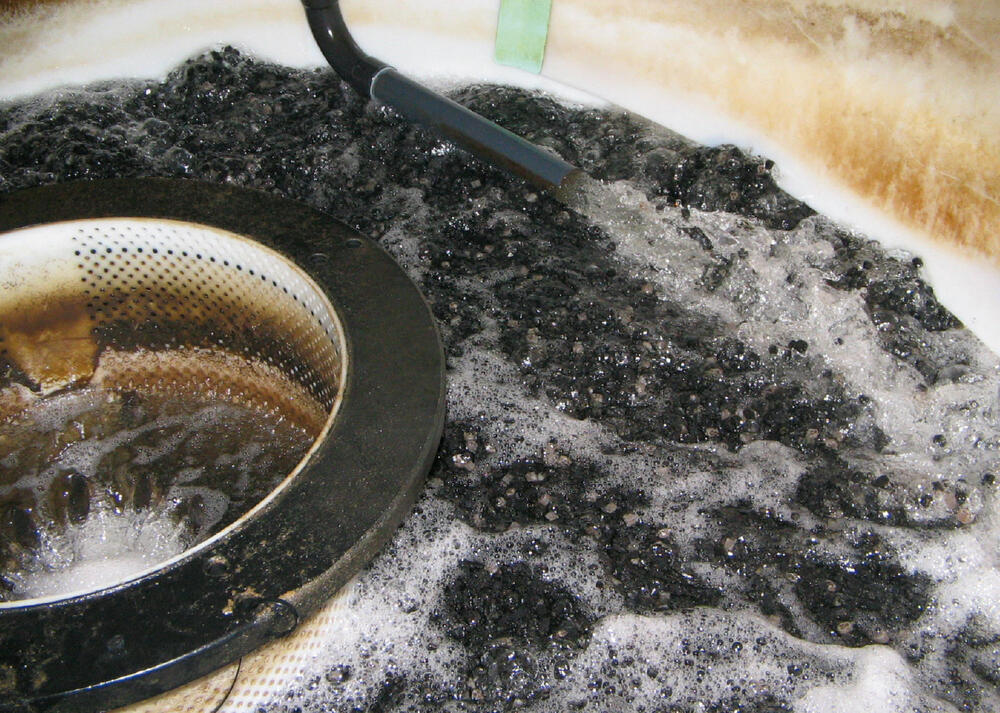
Just as in municipal sewage treatment plants, the nitrification process is of particular importance. Nitrification usually takes place in a floating filter pond. A plastics floating filter medium serves as `biocarrier´ on which nitrifying bacteria settle as biofilm. Chemical substances that are often washed out of newly fabricated plastics, however, may prevent the desired bacteria to settle on the medium or to effectively perform the degradation process.
To optimize settlement and activity of the nitrifying bacteria an interdisciplinary research team with experts from aquaculture, plant engineering and manufacture of plastics, toxicology and microbiology with financial support of DBU has developed a new biocarrier that meets the desired requirements and additionally offers sufficient material strength and low eco-toxicity. The research results can contribute to future environmentally sound aquaculture circuit systems which supply high-quality food fish from sustainable fish farming safely, effectively and economically.
Project Operation
LimnoMar - Labor für Limnische und Marine Forschung
Dr. Burkard Watermann
Bei der Neuen Münze 11
22145 Hamburg
Telefon : 040 / 678 99 11
Fax : 040 / 679 92 04
Email : mail@limnomar.de
Internet www.limnomar.de
Cooperation Partner
GEA 2H Water Technologies GmbH, Wettringen, www.gea-2h.com
Biozentrum Klein Flottbek/Universität Hamburg, www.biologie.uni-hamburg.de/bzf
GMA - Gesellschaft für Marine Aquakultur GmbH, Büsum, www.gma-buesum.de
Universität Duisburg-Essen, www.uni-due.de
Ref. 23821