
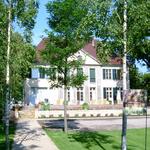
In 1909, the artist Max Liebermann acquired a property close to the Berlin Wannsee, on which he built a house and created an elaborate garden.
Weiterlesen
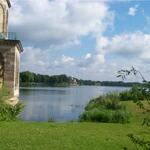
The Spirit Lake borders on the New Garden, which is part of the various Palaces and Parks of Potsdam and Berlin and which was designed by Johann August
Eyserbeck and Peter Joseph Lenné.
Weiterlesen
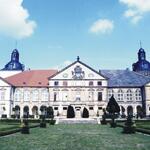
With approximately 1,000 gardens and parks of historical monument character, Saxony-Anhalt is rich in valuable cultural assets.
Weiterlesen
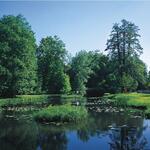
Still a source of inspiration for landscape designers is the Branitz Park which has been created by Hermann, Prince of Pückler-Muskau between 1846 and 1871.
Weiterlesen
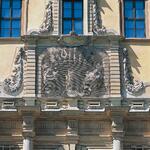
The artificial landscape Moritzburg is an area of approximately 300 hectares in the north-west of Dresden.
Weiterlesen
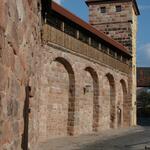
The Nuremberg city wall is among the most important European fortifications of the Middle ages.
Weiterlesen
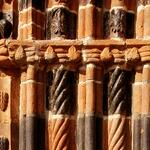
The portals of the late-Gothic church of St. Jakobi’s in the Brandenburg town of Perleberg show coloured decorative elements – lead-glazed bricks and form stones, as they are often found at historically important buildings in the North of Germany.
Weiterlesen
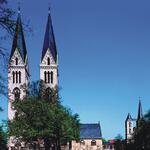
The Halberstadt Cathedral is one of the most outstanding examples of the early-Gothic period architecture in Germany.
Weiterlesen
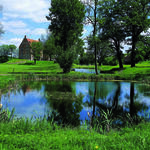
In the Mecklenburg-West Pomeranian gardens of Gützkow, Remplin, Ulrichshusen and the West Pomeranian parks of Putbus and Stralsund, nature
conservation and monument protection form a symbiotic relationship.
Weiterlesen
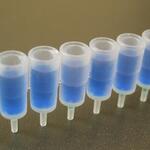
The Institute for Technical Chemistry of the University of Hanover, the Faculty for Bio-Process Engineering of the Technical University Kaiserslautern, the Sartorius
AG and the Cell Culture Service GmbH jointly developed a modular system based on membrane adsorbers for the protein purification.
Weiterlesen
